Clinical Background
Scoliosis is a common spinal deformity in adolescents and often requires surgical intervention when progressive curvature affects spinal balance, posture, or long-term quality of life. In developing regions, access to reliable spinal fixation systems and standardized surgical workflows plays a critical role in achieving predictable clinical outcomes.
In this case, a scoliosis correction procedure was successfully performed at a local orthopedic hospital in Dhaka, Bangladesh, involving a 14-year-old female patient diagnosed with adolescent scoliosis. The surgical objective was to correct spinal deformity, restore alignment, and achieve stable internal fixation using a 6.0mm pedicle screw–rod system.
Patient Profile and Preoperative Evaluation
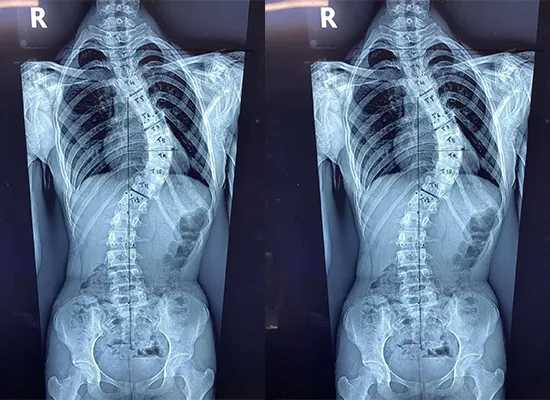
The patient presented with clinical and radiographic findings consistent with scoliosis. Preoperative imaging examinations were conducted to evaluate the characteristics of spinal curvature and to support surgical planning. These assessments helped the surgical team determine appropriate fixation levels and correction strategy.
Given the patient’s age and deformity characteristics, achieving controlled correction while maintaining postoperative stability was a key consideration. The surgical plan focused on segmental fixation and gradual alignment correction using pedicle screw instrumentation.
Surgical Strategy and Fixation Concept
For this scoliosis correction procedure, a 6.0mm pedicle screw system was selected as the primary fixation solution. Pedicle screw–rod constructs are widely used in spinal deformity surgery due to their ability to provide strong vertebral anchorage and precise control of spinal alignment.
The system allows three-dimensional correction by addressing coronal, sagittal, and axial components of spinal deformity. Through segmental fixation across multiple vertebral levels, corrective forces can be distributed evenly, supporting spinal balance and reducing mechanical stress on individual fixation points.
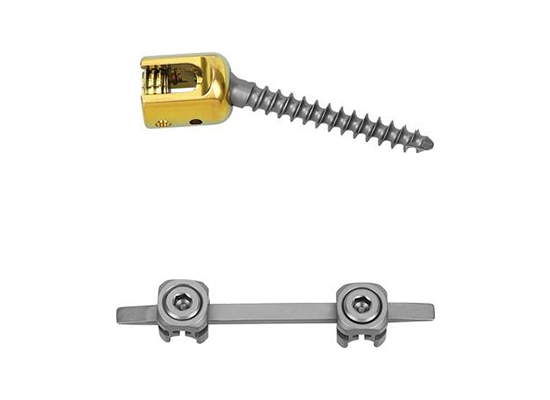
Implant Specifications Used in This Case
The following implants were utilized during the procedure:
6.0 Polyaxial Pedicle Screw
6.0 Crosslink-I (SW3.5)

These components worked together with the spinal rods to provide a stable posterior spinal fusion construct suitable for adolescent scoliosis correction.
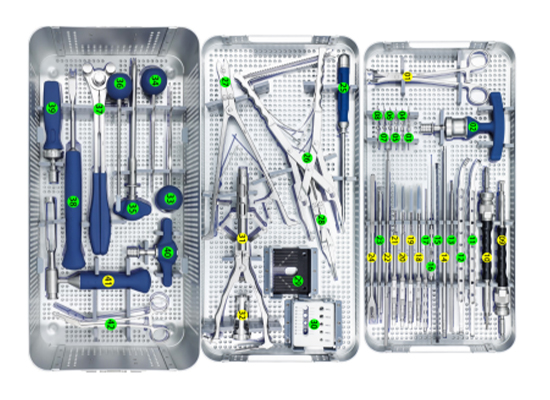
Instrument Set Overview
The Spinal Pedicle Screw Instrument Set used in Dhaka Central International Medical College & Hospital includes:
Pedicle screw insertion instruments
Rod measuring, bending, and insertion tools
Crosslink and connector instruments
Bone preparation and reduction tools

Its ergonomic design helps surgeons in Bangladesh and other regions perform complex scoliosis correction more efficiently and safely, reducing operative time and supporting accurate screw placement.
Postoperative Assessment and Outcome
Postoperative imaging demonstrated improved spinal alignment compared to preoperative status. The fixation construct appeared stable, supporting the intended correction. According to the surgical team, the patient showed satisfactory postoperative recovery, with no immediate fixation-related complications reported.

Surgical Summary and Clinical Significance
This scoliosis correction case from Dhaka, Bangladesh demonstrates the clinical application of a 6.0mm pedicle screw system in adolescent spinal deformity surgery. The case highlights key elements including segmental fixation, controlled deformity correction, and stable postoperative alignment.
Such cases provide valuable reference for orthopedic surgeons and distributors seeking reliable spinal fixation solutions for deformity correction in diverse clinical settings.
FAQ
1. What type of spinal condition was treated in this case?
This case involved the surgical treatment of adolescent scoliosis, a spinal deformity characterized by abnormal curvature of the spine.
2. Where was the scoliosis correction surgery performed?
The surgery was performed at a local orthopedic hospital in Dhaka, Bangladesh.
3. Why was a 6.0mm pedicle screw system selected for this case?
The 6.0mm pedicle screw system was selected to provide stable segmental fixation and support three-dimensional correction of spinal deformity.
4. What are the advantages of using polyaxial pedicle screws in scoliosis surgery?
Polyaxial pedicle screws allow easier rod connection and alignment adjustment, which is beneficial in complex spinal deformity correction procedures.
5. What role does a crosslink play in spinal fixation constructs?
A crosslink can help enhance construct stability by improving resistance to rotational forces, depending on the fixation strategy and surgical levels involved.
6. How was spinal alignment evaluated before and after surgery?
Spinal alignment was evaluated using imaging studies before surgery and postoperative radiographic assessments to confirm correction and fixation stability.
7. What was the postoperative outcome reported in this case?
Postoperative imaging showed improved spinal alignment, and the patient demonstrated satisfactory recovery with stable internal fixation.
8. Is this type of pedicle screw system commonly used for adolescent scoliosis?
Yes, pedicle screw–rod systems are widely used in adolescent scoliosis surgery due to their ability to provide reliable fixation and controlled deformity correction.