Case Overview
At Dhaka Central International Medical College & Hospital in Bangladesh,the spine surgical team successfully completed a complex scoliosis correction surgery for a 16-year-old female patient, Raisa (name changed for privacy). The procedure used a 6.0mm Spinal Pedicle Screw Instrument Set combined with compatible spinal implants to restore spinal alignment and stability.
This case highlights how a modern spinal pedicle screw system can help hospitals in Bangladesh achieve reliable deformity correction and long-term spinal balance for adolescent patients.
Case Profile
Raisa presented with visible spinal deformity and cosmetic concerns, along with occasional back discomfort and fatigue after daily activities. Clinical examination and imaging confirmed a structural scoliosis requiring surgical correction.
Preoperative Assessment and Planning
Before surgery, the spine team in Dhaka performed a comprehensive evaluation, including:
Standing full-spine X-rays to measure Cobb angles
Assessment of curve flexibility and rotation
Neurological examination
Evaluation of growth potential and overall health status
After multidisciplinary discussion, the surgeons concluded that spinal deformity correction using a 6.0mm Spinal Pedicle Screw Instrument Set was the most appropriate treatment plan. This approach was selected to provide:
Three-dimensional correction of the spinal curvature
Rigid segmental fixation using pedicle screws and rods
Improved coronal and sagittal balance
A stable construct to support long-term fusion and recovery
Preoperative Imaging
Preoperative imaging showed:
Marked lateral curvature of the thoracolumbar spine
Vertebral rotation and rib prominence
Imbalanced shoulders and trunk alignment
These findings confirmed the need for posterior spinal deformity correction and fusion using a pedicle screw–rod construct.

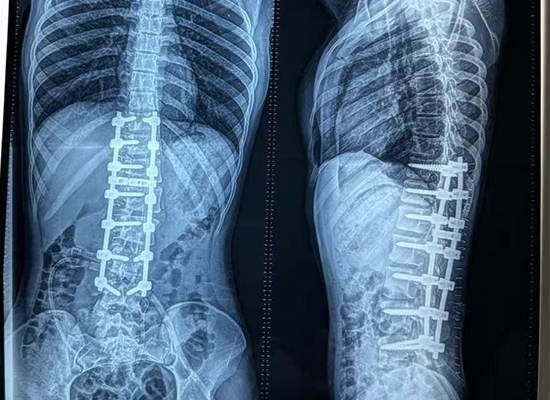
Preoperative full-spine X-ray showing thoracolumbar scoliosis in a 16-year-old patient from Dhaka, Bangladesh.
Surgical Summary
During the scoliosis correction surgery, the surgical team used the 6.0mm Spinal Pedicle Screw Instrument Set to place pedicle screws at multiple levels along the deformity. The system enabled:
Secure insertion of polyaxial pedicle screws into the vertebral pedicles
Attachment of spinal rods to connect the screws
Application of corrective maneuvers (derotation, translation, and rod contouring)
Achievement of controlled, progressive correction of the scoliotic curve
The lead spine surgeon expressed high satisfaction with the 6.0mm Spinal Pedicle Screw Instrument Set and compatible implants provided by our company. The technique allowed for three-dimensional correction of the deformity and rigid stabilization of the instrumented segments.
This pedicle screw–rod construct is commonly used in scoliosis and complex spinal deformity surgeries because it offers:
Strong segmental fixation
Precise control over spinal alignment
Reliable maintenance of corrective forces throughout the spine
Postoperative Imaging
Postoperative imaging demonstrated:
Significant improvement in spinal alignment
Reduced curvature and rib prominence
Balanced shoulders and trunk
Clinically, Raisa showed:
Stable neurological status
Satisfactory pain control
Gradual return to standing and walking with support
Improved posture and cosmetic appearance
Under close follow-up, the patient continued to recover smoothly, and the early results suggested a favorable long-term prognosis for spinal balance and quality of life.

Implant Specifications Used in This Case
The following implants were utilized during the procedure:
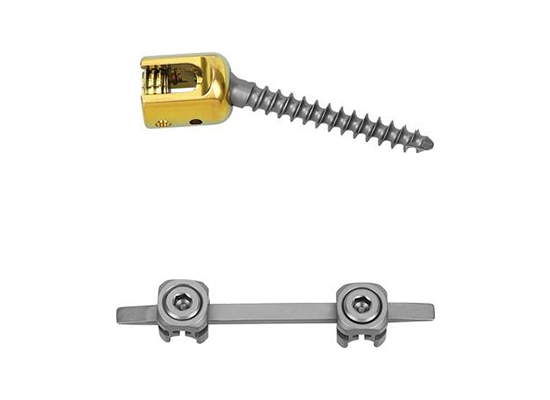
6.0 Polyaxial Pedicle Screw
6.0 Crosslink-I (SW3.5)

These components worked together with the spinal rods to provide a stable posterior spinal fusion construct suitable for adolescent scoliosis correction.
Instrument Set Overview
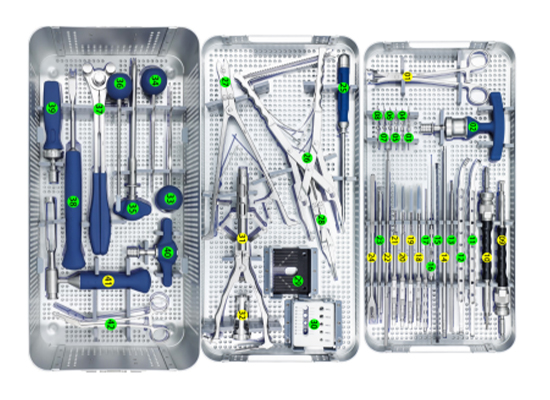
The Spinal Pedicle Screw Instrument Set used in Dhaka Central International Medical College & Hospital includes:
Pedicle screw insertion instruments
Rod measuring, bending, and insertion tools
Crosslink and connector instruments
Bone preparation and reduction tools

Its ergonomic design helps surgeons in Bangladesh and other regions perform complex scoliosis correction more efficiently and safely, reducing operative time and supporting accurate screw placement.
Clinical Significance for Spine Surgery in Bangladesh
This case demonstrates that with the support of a modern 6.0mm spinal pedicle screw system, hospitals in Bangladesh can:
Offer advanced scoliosis correction surgery to adolescent patients
Achieve reliable deformity correction and fusion
Improve cosmetic and functional outcomes for young patients and their families
For hospitals, distributors and spine surgeons looking for spinal pedicle screw systems suitable for scoliosis and other spinal deformity surgeries, this case provides real-world evidence of effective performance.
Conclusion & Contact
The successful scoliosis correction surgery for a 16-year-old girl in Dhaka highlights the importance of:
If you would like to learn more about this case or the 6.0mm Spinal Pedicle Screw Instrument Set, please contact us for detailed product information, set configuration and clinical support.
Contact Us for Full Case Details and Spinal Pedicle Screw Solutions
FAQ
1. What is scoliosis correction surgery?
Scoliosis correction surgery is a procedure that uses implants such as pedicle screws and rods to straighten and stabilize an abnormally curved spine. In this case from Bangladesh, a 6.0mm spinal pedicle screw system was used to correct the deformity and support spinal fusion.
2. Why was a 6.0mm spinal pedicle screw system chosen for this patient?
The 6.0mm pedicle screw system provides strong anchorage in the vertebral bodies and allows stable three-dimensional correction, which is especially important for adolescent scoliosis surgery requiring reliable fixation and long-term fusion.
3. Is scoliosis surgery safe for teenagers?
When performed by an experienced spine surgery team with appropriate implants and monitoring, scoliosis surgery is generally safe for teenagers. In this Dhaka case, the 16-year-old patient recovered smoothly with stable spinal alignment and no new neurological deficits.
4. How long does recovery take after scoliosis correction surgery?
Most patients begin sitting and walking with support within a few days after surgery. Initial recovery usually takes several weeks, while full bone fusion and long-term remodeling may take 6–12 months, depending on age, deformity severity and rehabilitation.
5. What are the benefits of using a pedicle screw–rod construct in scoliosis surgery?
A pedicle screw–rod construct provides strong segmental fixation, precise control of spinal alignment and reliable maintenance of corrective forces, which help achieve better curve correction, spinal balance and long-term stability.
6. What complications are monitored after scoliosis surgery?
Surgeons monitor for infection, bleeding, implant loosening or breakage, neurological changes and poor wound healing. With careful surgical technique and follow-up, the risk of serious complications is minimized.
7. Can scoliosis recur after correction surgery?
Once solid fusion is achieved and the spine has healed around the pedicle screw–rod construct, the risk of significant recurrence is generally low. However, regular follow-up imaging is recommended, especially in growing patients.
8. Is this type of scoliosis surgery available in Bangladesh?
Yes. As shown in this case from Dhaka, advanced scoliosis correction using a 6.0mm spinal pedicle screw system is already being performed in Bangladesh by specialized spine teams at equipped hospitals.