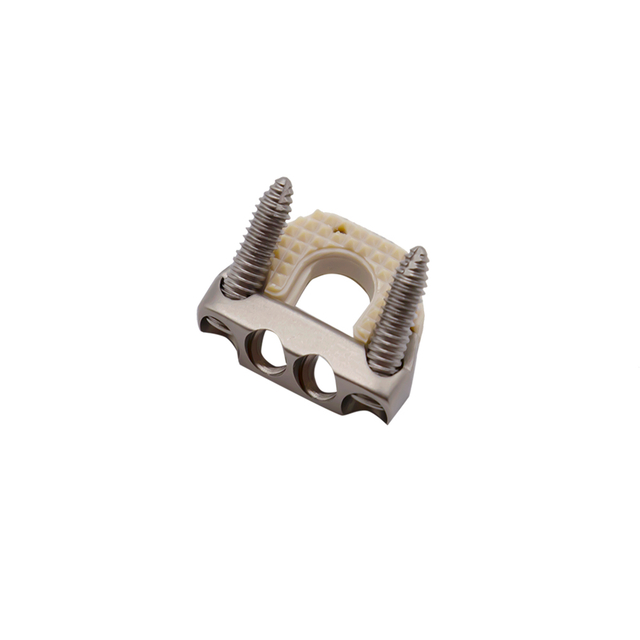
Product Overview
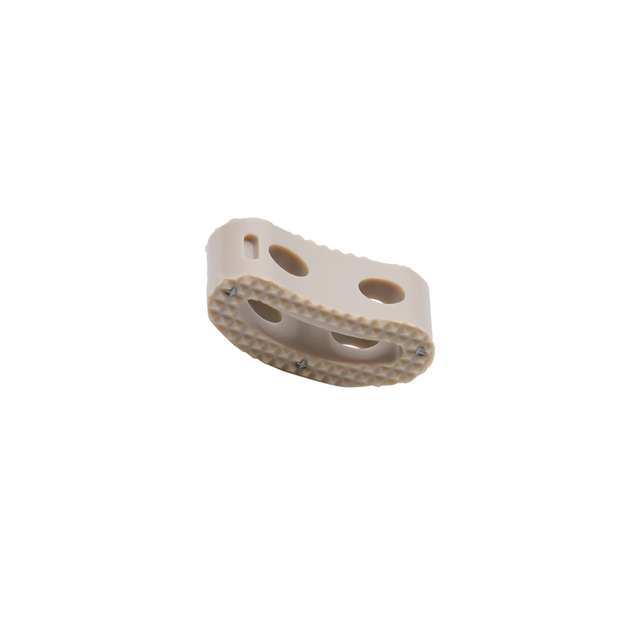
The Stryker Expandable Lumbar Cage combines an innovative expandable mechanical structure with advanced Tritanium 3D‑printed technology. The device restores disc height and segmental lordosis through in‑situ expansion, while its biomimetic porous structure is designed to promote bone ingrowth and biological fixation. It is indicated for posterior lumbar interbody fusion (PLIF) and transforaminal lumbar interbody fusion (TLIF).
Clinical Indications
Degenerative disc disease with instability
Grade I‑II lumbar spondylolisthesis
Revision surgery for recurrent disc herniation
Post‑decompression fusion for spinal stenosis
Corpectomy reconstruction (lumbar spine)
Pseudoarthrosis repair
Target levels: L1 – S1 (single or multi‑level)
Surgical approaches: PLIF / TLIF
Key Features
Expandable Design
In‑situ expansion – restores intervertebral height and lordosis through controlled expansion
Low insertion height – smaller initial profile facilitates minimally invasive placement
Independent control – selectable anterior or posterior expansion to adjust lordosis
Tritanium 3D Printing Technology
Proprietary AMagine™ technology – additive manufacturing for precise porous architecture
Biomimetic porosity – irregular pore size and shape mimicking cancellous bone
Fully interconnected pores – through‑pores from endplate to endplate
Fluid retention capacity – better fluid retention compared to traditional titanium
Cage Design Features
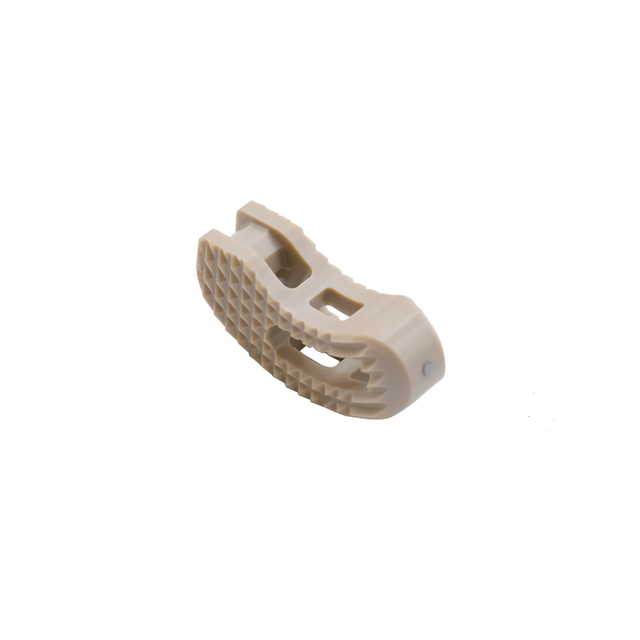
Large lateral windows – facilitate bone graft packing and radiographic fusion assessment
Bi‑directional fixation teeth – solid‑tip serrations for multi‑directional anti‑migration
Curved profile option – Tritanium TL curved cage for oriented insertion
Size Options
Comparison – Stryker Expandable Cage vs. Traditional Static Cage
Feature | Stryker Expandable Cage (New) | Traditional Static Cage (Old) |
Insertion method | Low‑height insertion, in‑situ expansion | Final‑height direct impaction |
Height restoration | Controlled expansion, precise restoration | Requires significant distraction |
Lordosis restoration | Selectable anterior/posterior expansion | Fixed lordotic angle |
Bone ingrowth material | Tritanium porous titanium (cancellous‑like) | PEEK or solid titanium |
Pore structure | Fully interconnected irregular pores (60‑80% porosity) | No pores or only surface coating |
Radiographic visibility | Large windows + titanium, clearly visible on X‑ray/CT | PEEK is radiolucent |
Fusion assessment | Direct bone ingrowth evaluation through porous structure | Requires indirect signs |
Anti‑migration design | Bi‑directional solid‑tip serrations | Conventional small teeth or smooth surface |
Clinical insight: The Tritanium technology in Stryker Expandable Lumbar Cage uses 3D printing to create a cancellous bone‑like porous structure designed to promote bone ingrowth and biological fixation. Clinical data shows fusion rates of 91‑96% with Tritanium cages.
For more surgical cases of this product, please contact us.
Why Choose CZMEDITECH as Your Stryker Expandable Lumbar Cage Supplier?
Minimally invasive friendly – low initial height enables smaller incision insertion
Precise height restoration – expandable design provides better disc height recovery
Promotes fusion – Tritanium porous structure designed for bone ingrowth
Radiographic compatibility – titanium material + large windows for postoperative fusion assessment
Multiple options – straight/curved profiles, various sizes for different anatomy
Clinically validated – fusion rate data support (91‑96%)
Frequently Asked Questions (FAQ)
1. What is the main difference between an expandable cage and a traditional static cage?
An expandable cage is inserted at a lower initial height and then expanded to the desired height within the disc space. This design reduces nerve root retraction and allows more precise restoration of disc height and segmental lordosis. Traditional static cages require impaction at the final height, which may increase insertion difficulty.
2. What is Tritanium technology?
Tritanium is Stryker's proprietary high‑porosity titanium material manufactured using AMagine™ 3D printing technology. It features irregular, interconnected pores designed to mimic the morphology of cancellous bone and promote bone ingrowth and biological fixation.
3. Does the expandable cage have subsidence risk?
Biomechanical studies show subsidence depth is significantly correlated with bone density. Under the same expansion torque, low bone density (e.g., 5 PCF) shows subsidence of approximately 2.3 mm, while high bone density (20 PCF) shows approximately 1.1 mm. Surgeons should select appropriate sizes based on bone quality and exercise caution.
4. What is the fusion rate of this cage?
Clinical data shows fusion rates of 91‑96% with Tritanium cages at 12 months. Single‑cage fusion rate is 91%, and dual‑cage fusion rate is 96%.
5. Is the cage MRI compatible?
Titanium alloy implants are MR conditional. Please refer to the product instructions for specific MRI safety information.
6. What size options are available?
Multiple footprint sizes are available, with a height range of 8‑14 mm and lordotic angle options of 0°, 6°, and 12° (including a 12° hyper‑lordotic option).
7. How does the cage prevent migration?
The cage features precision‑angled serrations with solid tips, designed to provide bi‑directional anti‑migration capacity and maximize endplate contact surface area.
8. Which surgical approaches are indicated for this cage?
It is primarily indicated for posterior lumbar interbody fusion (PLIF) and transforaminal lumbar interbody fusion (TLIF).
Please contact your local Stryker distributor or visit the official website. Complete surgical technique guides, catalogs, and quotations are available upon request.
 Español
 Русский
 Français
 English
 العربية
 Português
 Deutsch
 italiano
 日本語
日本語 한국어
한국어 Nederlands
 Tiếng Việt
 ไทย
ไทย Polski
 Türkçe
 አማርኛ
አማርኛ ພາສາລາວ
 ភាសាខ្មែរ
 Bahasa Melayu
 ဗမာစာ
ဗမာစာ தமிழ்
தமிழ் Filipino
 Bahasa Indonesia
 magyar
 Română
 Čeština
 Монгол
 қазақ
қазақ Српски
 हिन्दी
 فارسی
فارسی Kiswahili
 Slovenčina
 Slovenščina
 Norsk
Norsk Svenska
 українська
 Ελληνικά
 Suomi
Suomi Հայերեն
 עברית
עברית Latine
 Dansk
Dansk اردو
اردو Shqip
Shqip বাংলা
বাংলা Hrvatski
 Afrikaans
 Gaeilge
 Eesti keel
 Māori
Māori नेपाली
 Oʻzbekcha
 latviešu
 অসমীয়া
 Aymara
 Azərbaycan dili
 Bamanankan
 Euskara
 Беларуская мова
 भोजपुरी
 Bosanski
 Български
 Català
 Cebuano
 Corsu
Corsu ދިވެހި
 डोग्रिड ने दी
 Esperanto
 Eʋegbe
 Frysk
Frysk Galego
 ქართული
 guarani
 ગુજરાતી
 Kreyòl ayisyen
 Hausa
Hausa ʻŌlelo Hawaiʻi
 Hmoob
Hmoob íslenska
 Igbo
Igbo Ilocano
 Basa Jawa
 ಕನ್ನಡ
ಕನ್ನಡ Kinyarwanda
 गोंगेन हें नांव
 Krio we dɛn kɔl Krio
 Kurdî
Kurdî Kurdî
Kurdî Кыргызча
 Lingala
 Lietuvių
 Oluganda
 Lëtzebuergesch
 Македонски
 मैथिली
 Malagasy
 മലയാളം
 Malti
Malti मराठी
मराठी ꯃꯦꯇꯥꯏ (ꯃꯅꯤꯄꯨꯔꯤ) ꯴.
 Mizo tawng
 Chichewa
 ଓଡ଼ିଆ
ଓଡ଼ିଆ Afaan Oromoo
 پښتو
پښتو ਪੰਜਾਬੀ
 Runasimi
 Gagana Samoa
 संस्कृत
 Gaelo Albannach
 Sepeti
 Sesotho
 chiShona
 سنڌي
سنڌي Soomaali
 Basa Sunda
 Wikang Tagalog
 Тоҷикӣ
 Татарча
 తెలుగు
 ትግንያውያን
 Xitsonga
 Türkmençe
 संस्कृत
 ئۇيغۇرچە
 Cymraeg
 isiXhosa
 ייִדיש
 Yorùbá
 isiZulu